


Planters & Cachepots
Planters and cachepots anchor greenery with sculptural grace, turning botanical elements into intentional design features. This collection explores how form, material, and scale transform simple vessels into lasting focal points for every space—indoors or out.


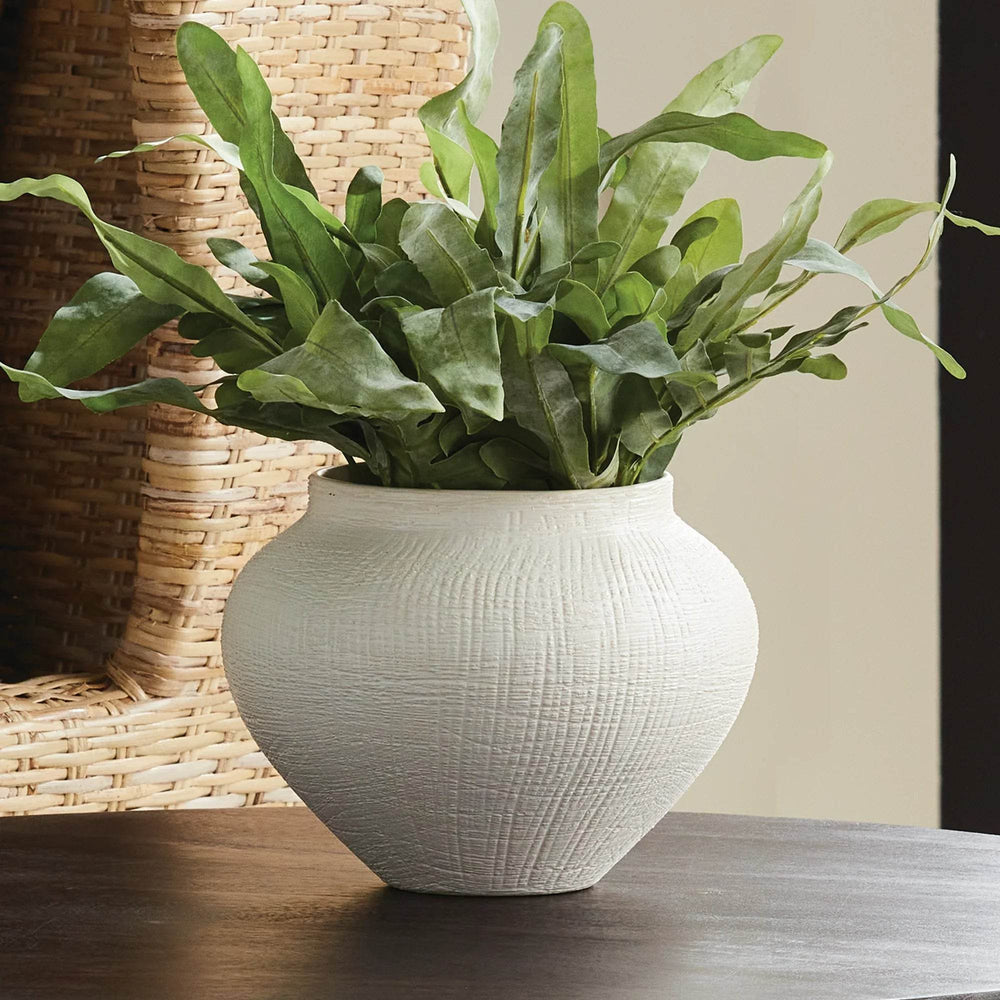


Choosing the Right Planters and Cachepots for Your Space
The Philosophy of Form
A planter is not just a container—it's a sculptural anchor that adds rhythm, balance, and atmosphere to a room. Whether tall and cylindrical or wide and bowl-shaped, the silhouette you choose sets the tone for the greenery it holds. In the language of interiors, planters are spatial tools that soften hard edges, guide the eye, and connect surfaces to the natural world. From low-profile cachepots to grand urns, each vessel shapes how plants interact with light, architecture, and furnishings.
The Literal Foundation
True quality in planters is found in material integrity. This collection features hand-thrown ceramics, glazed stoneware, natural rattan, and powder-coated metals—each selected for texture, weight, and longevity. Some vessels are crafted with reactive glazes or carved matte finishes; others rely on the quiet character of woven fibers or hammered aluminum. Whether indoors or out, the goal is the same: to ground the organic presence of plants with a form that feels timeless and considered.
The Stylist’s Directive
Effective planter styling relies on contrast, proportion, and placement. In sunrooms or living spaces, use a trio of vessels in graduated heights to create vertical rhythm. Tall planters make sculptural statements in entryways, while low bowls serve as soft focal points for dining tables or consoles. Cachepots work especially well on shelves and nightstands—simply slip in a grow pot for instant polish. When grouping, vary materials or finishes, but tie them together with shared tone or texture to maintain cohesion.
The Curated Connection
Complete your styling story by pairing your favorite vessels with the lush greenery of our Artificial Flora & Topiaries, or accent their base with a sculptural object from our Decorative Objects & Sculptures for a grounded, layered aesthetic.
Planter & Cachepot FAQs
A planter typically includes a drainage hole for direct planting, allowing excess water to escape and protect root health. A cachepot, on the other hand, is a decorative cover—designed without drainage—to conceal a grow pot. It's ideal for polished styling without the mess of repotting or water leakage.
Not necessarily. For ease and flexibility, many designers recommend leaving plants in their nursery grow pots and slipping them into a cachepot. This keeps watering simple, protects the interior finish, and allows you to rotate greenery seasonally without disrupting roots.
Some planters in our collection are suitable for covered outdoor areas, especially those made of ceramic, metal, or resin. However, natural fibers like rattan or seagrass are best kept indoors or in dry zones to prevent weather damage. Always bring planters inside during freeze-thaw cycles to preserve structural integrity.
As a rule of thumb, the planter should be 1–2 inches wider in diameter than the grow pot to allow for airflow and easy insertion. For plants with trailing foliage or dramatic height, a larger vessel helps balance visual weight and prevents tipping.
To protect your surfaces, place a felt pad, cork mat, or plastic liner beneath the cachepot—especially when watering live plants. Even decorative vessels can trap condensation over time, so adding a buffer layer ensures wood and stone surfaces remain pristine.
Group in threes on shelves, mantels, or dining tables. Mix heights and textures for contrast, and repeat a tone or material across the grouping for cohesion.